The Bespoke Fallacy: High-Altitude Risks in Specialized Builds
Consider a $250 million high-performance asset, such as an indoor refrigerated facility (snowdome) or a specialized laboratory. These projects are often framed by stakeholders as "feats of engineering never before seen." While the technical requirements may be novel, the physics of a budget and the psychology of a subcontractor remain constant.
The danger for an Owner lies in the "Bespoke Fallacy"—the belief that because a project is one-of-a-kind, standard industry processes no longer apply. This mindset is the "Malevolent Hiding Hand" of capital development. If a project is treated as too special for rigorous baselines, the project is no longer being managed; it is being "discovered" at the Owner’s expense.
The Complexity Tax: Padding the Estimate
When a design is labeled as "unique," the first casualty is the cost baseline. Contractors and subcontractors, fearing the unknown, apply what is effectively a "complexity contingency"—a premium added to bids to cover unvetted details.
The "Uncoordinated" Design: In many instances, "special" is simply a polite industry term for "uncoordinated." A custom curved façade or a bespoke glass atrium often lacks the historical data required for accurate pricing. Without standard details to fall back on, the RFI (Request for Information) log typically balloons.
Estimating Friction: On a standard Class-A office build, an Owner can rely on competitive benchmarking. On a bespoke build, the lack of comparable data allows vendors to pad estimates by 20–30% under the guise of "specialized labor." This is not a technical requirement; it is a transfer of risk from the contractor's ledger to the Owner’s contingency fund.
The Erosion of the Baseline: Scope Gaps and RFI Balloons
In every specialized project, the delta between "architectural vision" and "field reality" is where the budget dies. A custom design that fails to account for the physical requirements of HVAC ducting, structural tolerances, or electrical pathways creates a cascade of Change Orders.
Case Study of Customization: In a high-end commercial fit-out, a decision to move from standard finishes to custom, hand-rubbed millwork can see costs triple between the preliminary drawing and the final shop drawings. This isn't just a material cost increase; it’s a coordination cost. The adding of reveals, custom stains, and non-standard attachments requires more management hours and more senior supervision.
The Value Engineering Trap: Owners often find themselves "value engineering" essential building systems—the very components that drive the asset’s ROI—to pay for an "ego wall" or a bespoke lobby feature. This is a strategic failure. Cutting the quality of the mechanical plant to fund a non-standard aesthetic detail is a direct hit to the Total Cost of Ownership (TCO).
Governance as the Anchor: CMAA Standards in High-Risk Builds
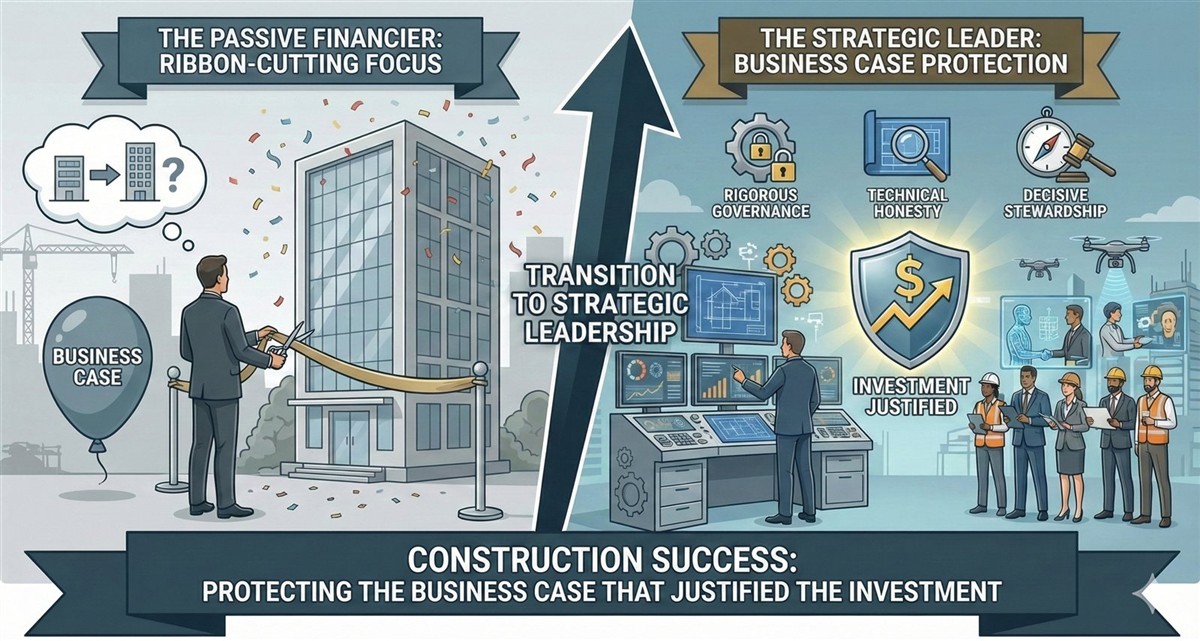
The more eccentric the project, the more boring the fundamentals must be. Whether overseeing a $60 million GMP laboratory or a $500 million mixed-use development, the governance must be identical.
Rigid Project Controls: A common red flag is a Construction Manager suggesting that "usual reporting" isn't necessary because the project is "different." The reality is the opposite: the more unique the asset, the more rigid the Project Controls must be.
Standardized Reporting: An Owner requires a consistent reporting cadence, a disciplined risk protocol, and a transparent Management Information System (MIS). You need a standard framework to measure non-standard work. If the team cannot produce a clear Cost Analysis because the work is "too complex," the Owner has lost control of the project.
"So What?": Asset vs. Liability
From a fiduciary perspective, "unique" frequently translates to "expensive to maintain." An engineered solution might win architectural acclaim, but if the parts are proprietary and the labor required to service them is specialized, the Owner has built a long-term liability.
The Total Cost of Uniqueness: A custom-built system often lacks the replacement-part ecosystem of a standard industrial system. If a bespoke chiller fails ten years into the asset's life and the manufacturer is out of business, the Owner faces a catastrophic capital replacement cost that was never modeled in the original pro forma.
Schedule and Debt Service: Investors do not care about "one-of-a-kind" fingerprints; they care about Internal Rate of Return (IRR). If a specialized design feature delays the Certificate of Occupancy by six months, that is half a year of debt service with zero rental income. That "unique" feature is now a massive hole in the project’s cash flow.
The Bottom Line
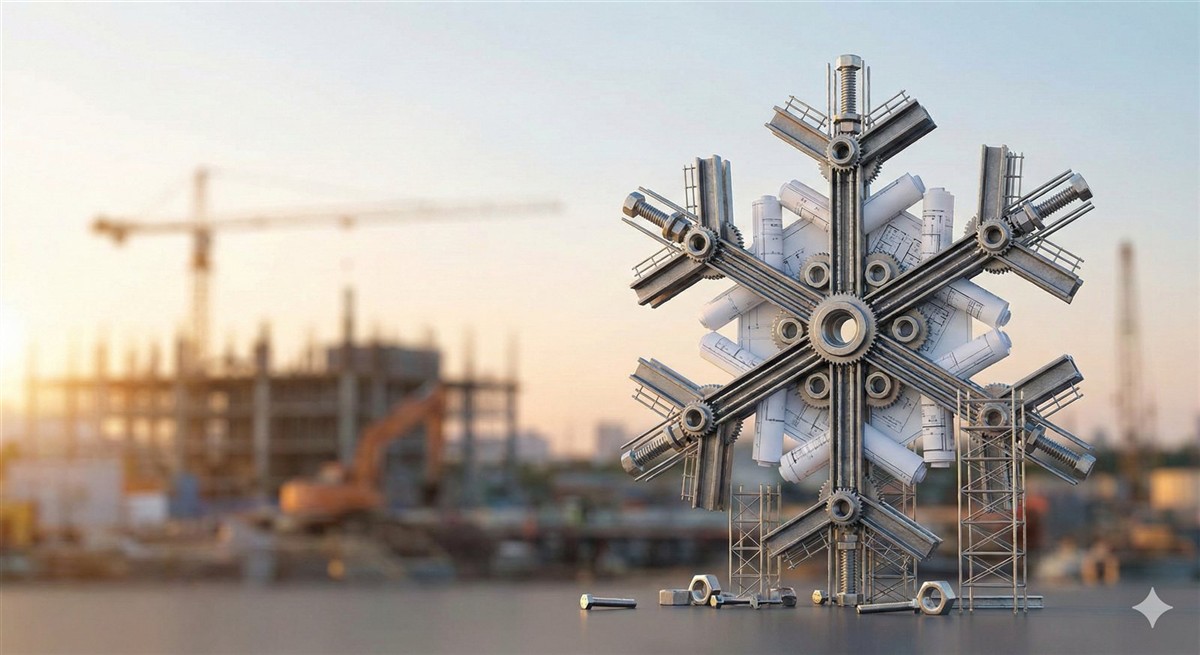
Every project is a unique fingerprint of site conditions, codes, and Owner whims. However, treating a project as an exception to the rules of construction management is a recipe for a "cold, expensive slush pile" of a budget.
Standard processes—governance, clear communication, and rigorous technical vetting—are the only things that prevent a "visionary" project from becoming a financial disaster. Build the dream, but manage the reality with a cold, economical eye on the baseline.
Actionable Strategy for Owners:
Audit the Complexity: Demand a "Complexity Audit" at 30% design. Ask specifically: "Which parts of this design are proprietary or non-standard, and what is the 20-year cost of maintaining them?"
Enforce CMAA Standards: Do not allow the CM to deviate from standard reporting protocols. If they can’t report on it, you shouldn’t build it.
Benchmark the Padding: If a bid comes in high due to "uniqueness," force the contractor to break out the "complexity contingency." Make them justify the risk in dollars, not adjectives.
Prioritize TCO over Ego: If a bespoke aesthetic feature threatens the budget of a critical building system, the aesthetic feature must be the first thing on the cutting block. Protect the asset's performance first.