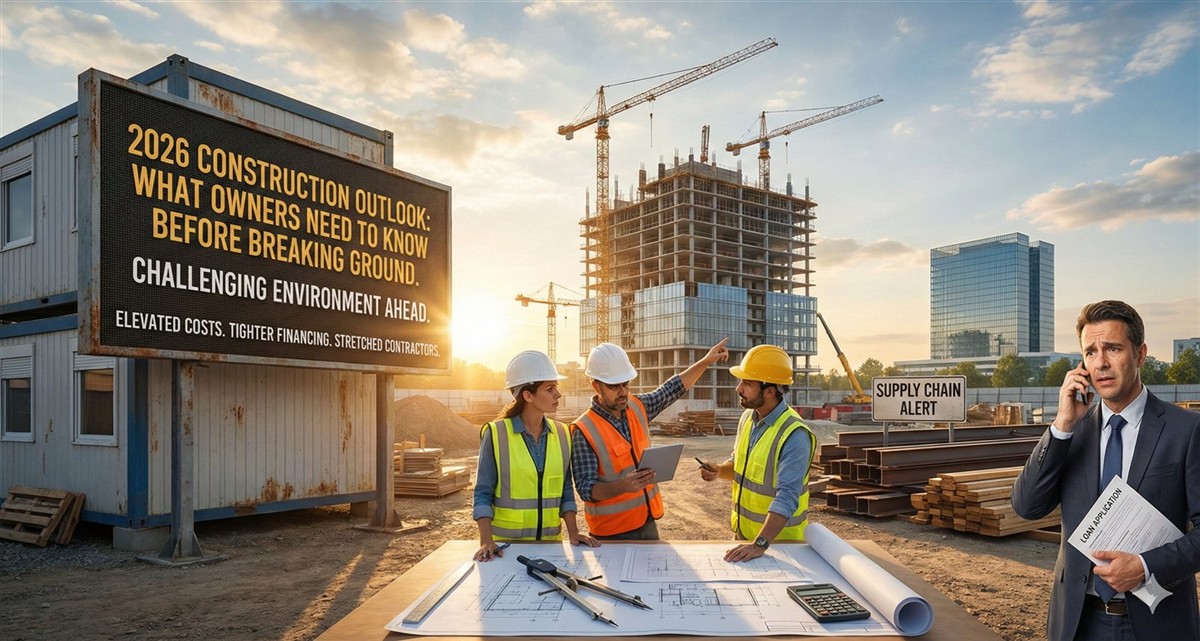
The Cost Picture Isn't Improving
Material prices for steel, concrete, lumber, and MEP components remain stubbornly high. Tariff uncertainty and supply chain volatility are the main culprits. Add rising insurance premiums and contractor overhead, and bids are coming in higher than many owners budgeted for.
Financing is tighter too. Banks are requiring more equity, larger contingency reserves, and more scrutiny on underwriting. If you're relying on traditional lending, expect longer timelines and tougher terms. Private credit offers flexibility but at a premium.
The Labor Shortage Is Your Problem Too
The industry is short hundreds of thousands of skilled workers. That shortage translates directly into schedule risk, quality concerns, and higher labor costs that contractors pass through in their pricing.
The best project teams are in demand. If you want experienced superintendents and skilled trades on your job, you need to be realistic about timelines, competitive on contract terms, and decisive when you find the right partners.
Where the Market Is Moving
Data centers are absorbing massive capital investment—projects like the $15 billion Stargate facility in Wisconsin signal where institutional money is flowing. Infrastructure and energy projects remain relatively stable, though federal support may taper as IIJA funding winds down.
Adaptive reuse is gaining momentum as a practical solution to the housing shortage. If you own underperforming office or commercial assets, conversion to residential may pencil out better than holding or selling at a discount.
How to Protect Yourself
In this market, owners need to be proactive:
Get realistic on budget and schedule. Optimism bias kills projects. Build in adequate contingency and don't let early estimates lock you into unrealistic expectations.
Scrutinize your contracts. Contractors are pushing for tariff-adjustment and escalation clauses. Know what you're agreeing to and model the exposure before you sign.
Invest in preconstruction. The money you spend on thorough design, accurate estimating, and buildability reviews pays off in fewer surprises during construction.
Choose partners carefully. The lowest bid isn't always the best value. Evaluate contractors on their capacity, their teams, and their track record—not just their number.
More from the original Construction Dive article: https://tinyurl.com/4eauedj6