The Handover Trap: Understanding Substantial Completion
The punch list is three pages long. The lobby stone has a hairline crack. The HVAC balancing report is still "in progress." Yet, the Architect just handed over a signed certificate.
To a frustrated Owner, the building feels unfinished. To the contract, the building is done.
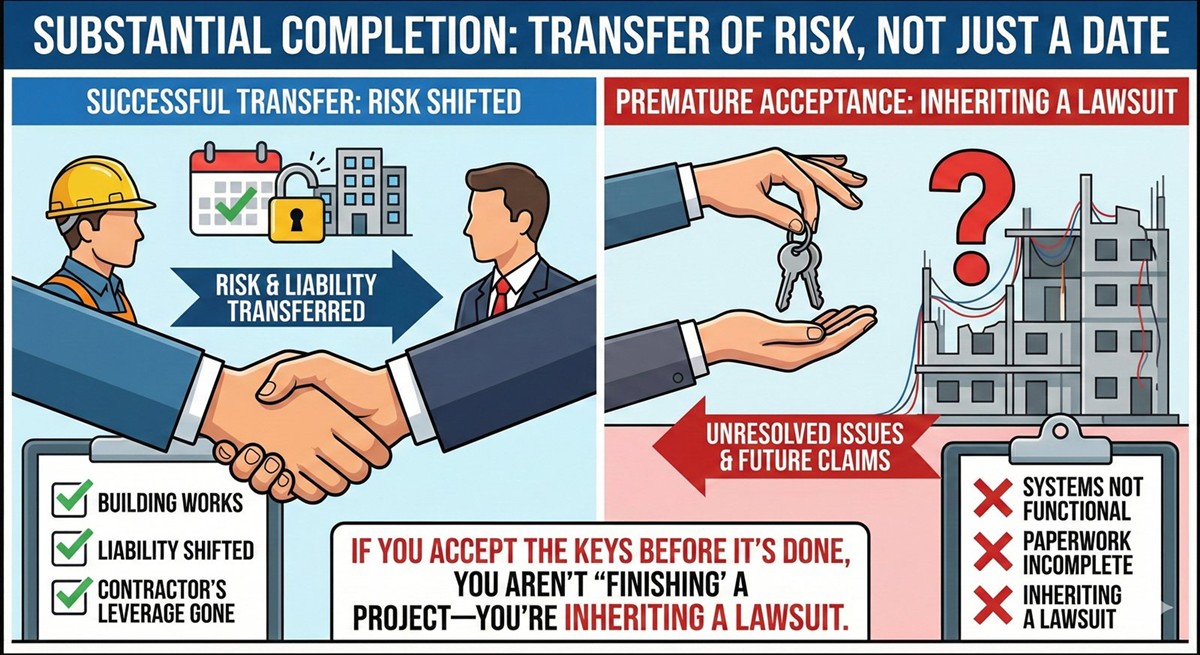
This is the reality of Substantial Completion. It is not a measure of perfection; it is a legal determination of "beneficial use." If the facility can be used for its intended purpose, the risk moves from the contractor’s ledger to the Owner’s.
Understanding the mechanics of this shift is the difference between a controlled handover and a liability nightmare.
The Transfer of Risk and Insurance
The moment the Certificate of Substantial Completion (often AIA G704) is signed, the "Builder’s Risk" policy typically expires. Responsibility for physical loss, fire, and theft shifts to the Owner’s permanent property insurance.
Owners must notify their carriers before this date. If a pipe bursts forty-eight hours after the certificate is signed and the permanent policy isn't active, the Owner is self-insured for the catastrophe. Simultaneously, the electric, water, and security bills become Owner expenses. The contractor is no longer paying to keep the lights on.
The Financial Pivot
Substantial Completion is the "stop-work" order for Liquidated Damages (LDs). Once the Owner has the ability to occupy the space, the legal right to claim "loss of use" damages generally evaporates.
This milestone also triggers the release of Retainage. The Owner is contractually obligated to pay out the bulk of held funds, keeping back only a dedicated amount—typically 200% of the estimated value of the remaining Punch List—to ensure the final 1% of the work is actually finished. Courts have little patience for Owners who withhold millions in contract balances over a few thousand dollars in paint touch-ups.
The Warranty Clock Starts Ticking
The one-year statutory warranty and most manufacturer equipment warranties do not start when the building opens to the public—they start at Substantial Completion.
If an Owner delays the move-in by three months due to internal operational issues, they have effectively burned 25% of their warranty period while the building sat empty. The clock is indifferent to whether the Owner is actually using the space; it only cares that the Owner could have used it.
The Punch List Protocol
A common failure mode is the Owner's team performing the contractor's job. Contractually, the contractor must submit a comprehensive list of incomplete items before requesting an inspection.
The Owner’s Representative or Architect then verifies and augments that list. This document becomes the final roadmap to Final Completion. Once the building is occupied, the Owner must grant the contractor access to finish these items—often during off-hours—which requires its own layer of coordination and security.
"So What?"
Financial Impact: You must be liquid enough to release retainage while maintaining enough leverage to finish the job.
Schedule Risk: Delays in signing the certificate extend the contractor's overhead costs (General Conditions), which they may attempt to pass to the Owner.
Asset Management: Your operations team must be ready to take the keys. If the building is "yours" on Friday, you need a maintenance crew on-site Saturday.
The Bottom Line
Substantial Completion is a business decision wrapped in a legal definition. Don’t let a quest for 100% perfection blind you to the 100% transfer of liability. When the building is functional, take the keys, change the insurance, and start the warranty.
Industry Terms to Know:
Beneficial Use: The point at which an Owner can occupy or utilize the work for its intended purpose. This is the "acid test" for Substantial Completion.
Retainage: A portion of the contract price (typically 5-10%) withheld until the end of the project to ensure the contractor finishes all tasks.